


Cocept of weapons 2
- Apr 1, 2016
- 1 min read
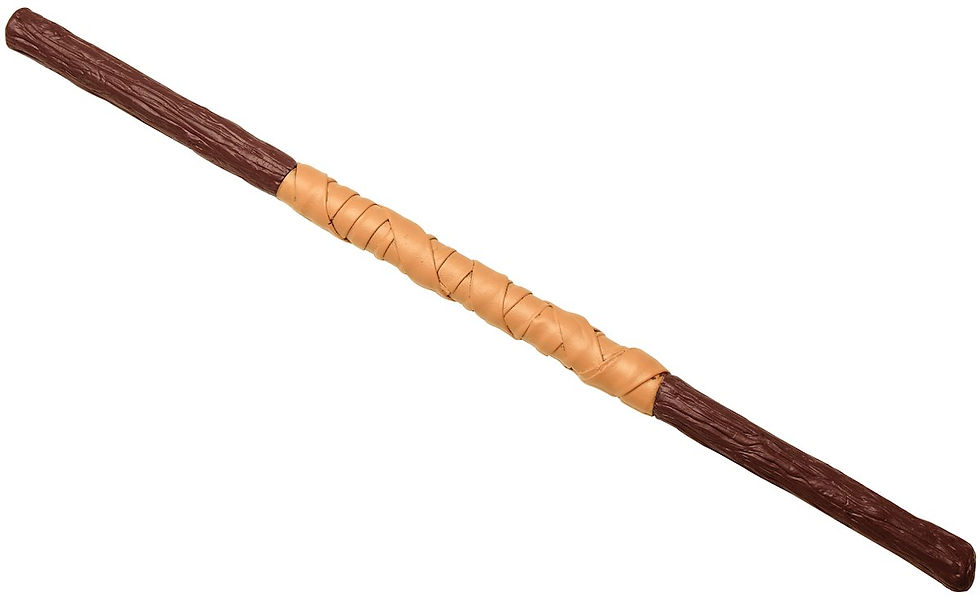
The bō is usually made with hard wood or a flexible wood, such as red or white oak, although bamboo and pine wood have been used, more common still is rattan for its flexibility. The bō may be tapered in that it can be thicker in the center (chukon-bu) than at the ends (kontei)[6] and usually round or circular (maru-bo). Some bō are very light, with metallic sides, stripes and a grip which are used for XMA and competitions/demonstrations. Older bō were round (maru-bo), square (kaku-bo), hexagon [7](rokkaku-bo) or octagon (hakkaku-bo). The average size of a bō is 6 shaku (around 6 ft (1.8 m)) but they can be as long as 9 ft (2.7 m) (kyu-shaku-bō).[2]
A 6 ft (1.8 m) bō is sometimes called a rokushakubō . This name derives from the Japanese words roku, meaning "six"; shaku ; and bō. The shaku is a Japanese measurement equivalent to 30.3 centimeters (0.994 ft). Thus, rokushakubō refers to a staff about 6-shaku (1.82 m; 5.96 feet) long. The bō is typically 3 cm (1.25 inch) thick, sometimes gradually tapering from the middle (chukon-bu) to 2 cm (0.75 inch)at the end (kontei). This thickness allows the user to make a tight fist around it in order to block and counter an attack.[2]


Comments